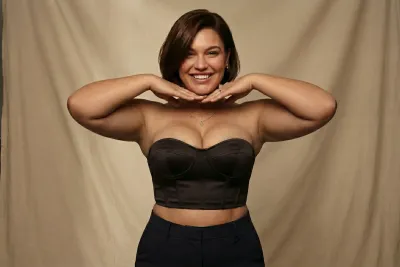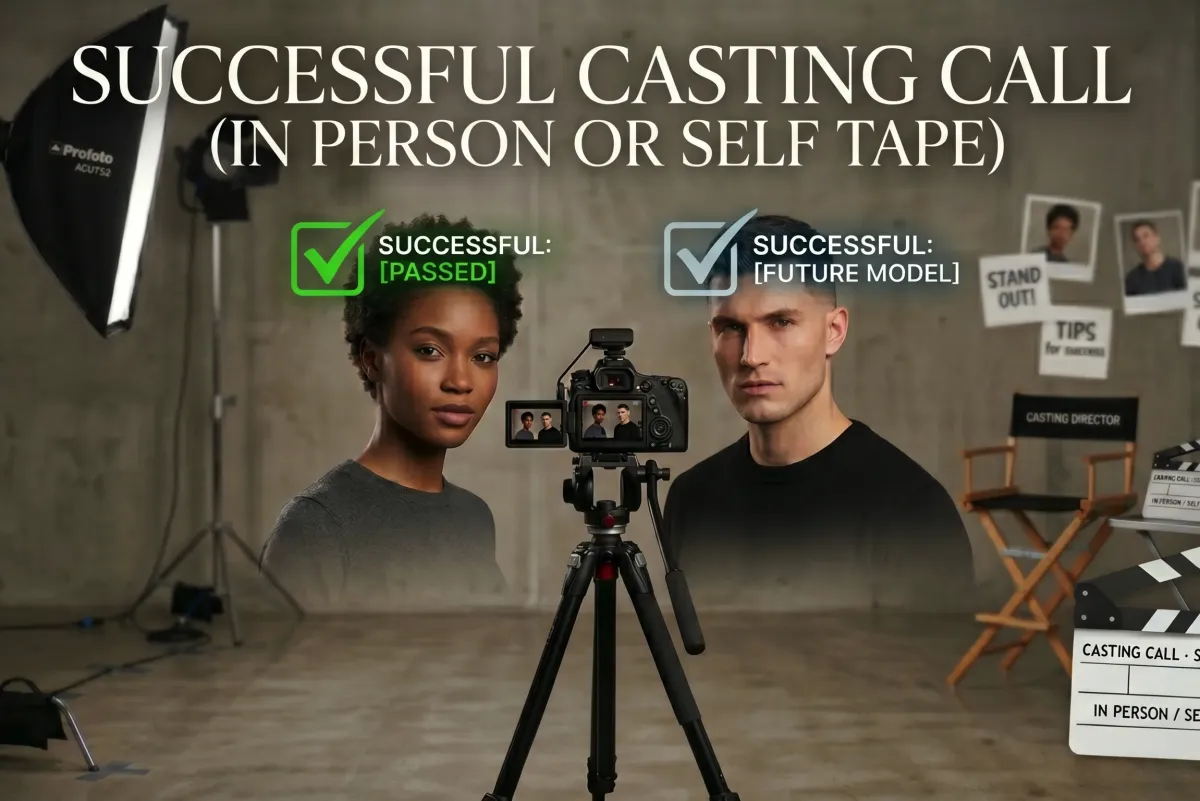
Casting calls in 2026 happen in two formats: traditional in person castings and remote self tape submissions. The post 2020 shift toward self tape was substantial: many commercial castings, brand campaigns, and even some fashion editorial castings now happen entirely on video, with the model recording at home and submitting through a portal. This article covers both formats. The fundamentals (preparation, presence, professionalism) translate; the specifics differ.
In person castings
Be on time, which now means 10 to 15 minutes early. This is the universal rule and it has not changed. Late arrivals signal lack of professionalism even when the casting director is running behind. Plan for traffic, transit delays, and the time to find the actual room. If you are early, wait outside or in a coffee shop nearby; do not enter the casting space more than 15 minutes ahead.
Bring what is asked for. Bring nothing else. Most castings have a specific brief: bring a portfolio, headshots, comp card, specific wardrobe. Read the brief and bring exactly that. Do not bring extra material that was not requested. Do not bring outdated portfolio shots you are not proud of.
Know what wardrobe is requested. Casting briefs in 2026 are increasingly specific about wardrobe (neutral colored fitted clothing, no logos, hair pulled back, minimal makeup). Follow the brief precisely. Showing up in your own creative interpretation when a specific look was requested signals you do not read briefs, which makes the casting director worry about how you will be on set.
Be ready to slate. A slate is the standard intro: name, agency or self, height, location. Practice it so it sounds natural rather than rehearsed. Casting directors form impressions in the first 10 seconds and the slate is part of that.
Take direction quickly. Casting directors give direction (move closer, turn left, soften the expression) and watch how you respond. The model who adjusts smoothly without confusion gets booked over the model with marginally better look but who needs every direction repeated. Practice taking direction with a friend before real castings.
Self tape castings
The self tape format is now standard for a substantial share of commercial, brand activation, and lifestyle castings. The mechanics that matter:
Lighting matters more than camera quality. A modern smartphone camera at the right lighting beats a professional camera in bad lighting. Soft natural light from a window during daytime is the easiest setup. Avoid overhead lighting that creates harsh shadows. Avoid backlight that turns you into a silhouette.
Frame for the brief. Most self tapes ask for a specific framing: head and shoulders, full body, specific wardrobe. Hit the framing precisely. If they ask for full body, full body means head to feet, not waist up.
Background should be plain. Plain wall, neutral color, no busy patterns or visible clutter. The viewer needs to evaluate you, not your room.
Audio matters when speaking is part of the tape. If the brief includes any spoken element (slate, character read, brand mention), the audio needs to be clean. A ten dollar lavalier mic plugged into your phone substantially improves audio quality. Test playback before submitting.
Submit in the requested format. Briefs specify file format (often MP4), aspect ratio (often 16:9 or 9:16 for vertical), and naming convention (often Last_First_Project). Following the format is part of the casting; off format submissions get rejected without being watched.
Submit early, not last minute. Casting portals get overwhelmed near deadlines. Tapes submitted hours before the deadline get full attention; tapes submitted in the final 30 minutes often get scanned quickly. The work to record and edit is the same; submit when the casting director has time to actually evaluate the submission.
The fundamentals of preparation, professionalism, and reading the brief carefully apply to both formats. The model who treats every casting as an audition deserving serious preparation books more work than the model with marginally better look but casual approach.