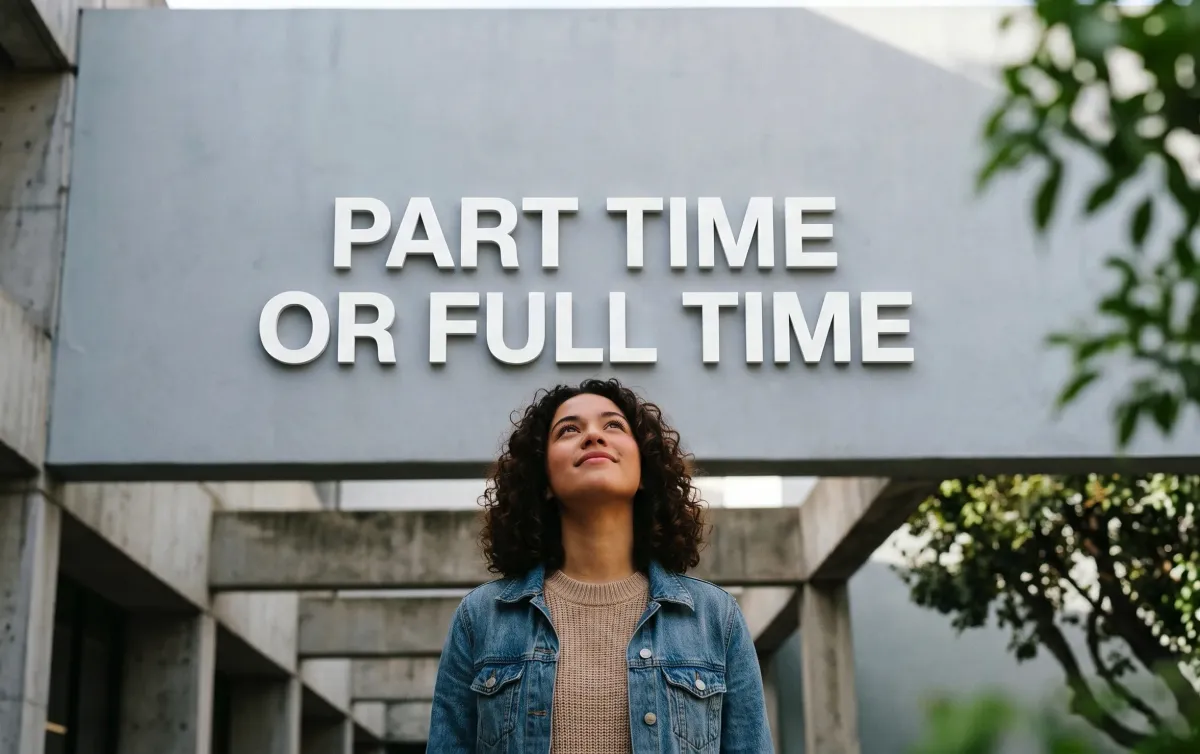
The traditional framing of "full time vs part time modeling" misses a third path that has become equally significant in 2026: the creator track, where modeling work is integrated with substantial social media income from brand partnerships, subscription content, and direct creator economy revenue. Each path produces different career trajectories, different income patterns, and different life situations. The choice between them is a real decision with downstream implications.
This article covers what each commitment level actually looks like, the realistic income picture for each, and the factors that should inform which path fits your situation.
The three paths
Full time modeling. The traditional path: modeling is your primary or only income source, you organize your life around availability for bookings, and you typically have agency representation in segments that need it. Realistic income for working full time models in 2026 ranges from 30,000 dollars annually for early career models in tier 2 markets to 200,000+ dollars annually for established working pros in major markets, with the upper tier reaching substantially higher for top of segment careers. The advantages: full time focus produces faster portfolio building and relationship development, and the income at the working pro stage exceeds what most part time paths produce. The tradeoffs: income volatility (especially in the first 24 months), the pressure of being financially dependent on a freelance industry, and the geographic constraints of being available for major market castings.
Part time modeling. Modeling work alongside another primary income source (traditional employment, freelance work in a related field, school). Realistic for most segments, particularly promotional, brand activation, commercial, and creator work. Realistic income for serious part time modeling in 2026 ranges from 5,000 dollars annually for occasional bookings to 40,000+ dollars annually for active part timers who book consistently. The advantages: financial stability from the other income source absorbs modeling income volatility, geographic flexibility, and the option to build modeling slowly without the pressure of full time financial dependence. The tradeoffs: slower portfolio building, less availability for casting opportunities, and the difficulty of breaking into segments (editorial fashion particularly) that demand full time availability.
Creator track. Modeling integrated with substantial social media income from brand partnerships, subscription content, and direct creator economy revenue. The newest and fastest growing path. Models on this track typically combine traditional bookings with creator income, with the mix varying substantially by individual. Realistic income for working creator track careers ranges from 25,000 dollars annually for early stage creators with mid tier social presence to 500,000+ dollars annually for established creators with macro audiences and active brand partnership flow. The advantages: less dependence on traditional industry gatekeepers, scalable income through audience growth, and the option to build long term creator careers that outlast traditional modeling productive windows. The tradeoffs: substantial time investment in content production, the volatility of platform algorithm changes, and the ongoing operational overhead of running what is effectively a small media business.
How to choose
The decision factors that consistently matter:
Financial bridge capacity. Full time modeling requires bridging 6 to 24 months of limited income before stable bookings emerge. Models without savings, family support, or other bridge income sources should typically not commit to full time modeling cold; the financial pressure derails careers before they can compound. Part time modeling alongside other income makes the build period substantially more sustainable.
Geographic situation. Full time editorial fashion realistically requires presence in NYC, LA, or international fashion capitals. Full time commercial modeling can work in tier 2 markets (Atlanta, Chicago, Miami, Dallas) with somewhat lower ceiling. Creator track has minimal geographic constraints; you can build a creator career from anywhere with reliable internet. Match the path to where you can actually live.
Personality fit for content production. The creator track requires sustained output of social media content. Models who naturally enjoy posting, engaging with audiences, and producing daily content thrive on this path. Models who find content creation draining or who prefer the more concentrated production rhythm of traditional bookings often do better on the full time or part time traditional paths.
Career stage. Many working models start on a part time path, transition to full time modeling once income stabilizes, and add creator track elements as social media presence grows. The paths are not mutually exclusive; they are stages of a career that often integrates all three over time. Treating them as fixed lifelong choices oversells how rigid the actual industry pattern is.
The honest summary: there is no universally best path. Full time modeling has the highest ceiling for segments that demand availability; part time modeling produces sustainable careers with less financial risk; creator track integrates with traditional modeling and produces scalable long term income. Pick the path that fits your specific situation, expect to revisit the choice as your career develops, and treat the decision as serious career planning rather than a generic "follow your dreams" framing.